
Kirill Gerstein Returns with Two Concerts You Won’t Hear Anywhere Else
March 17, 2026
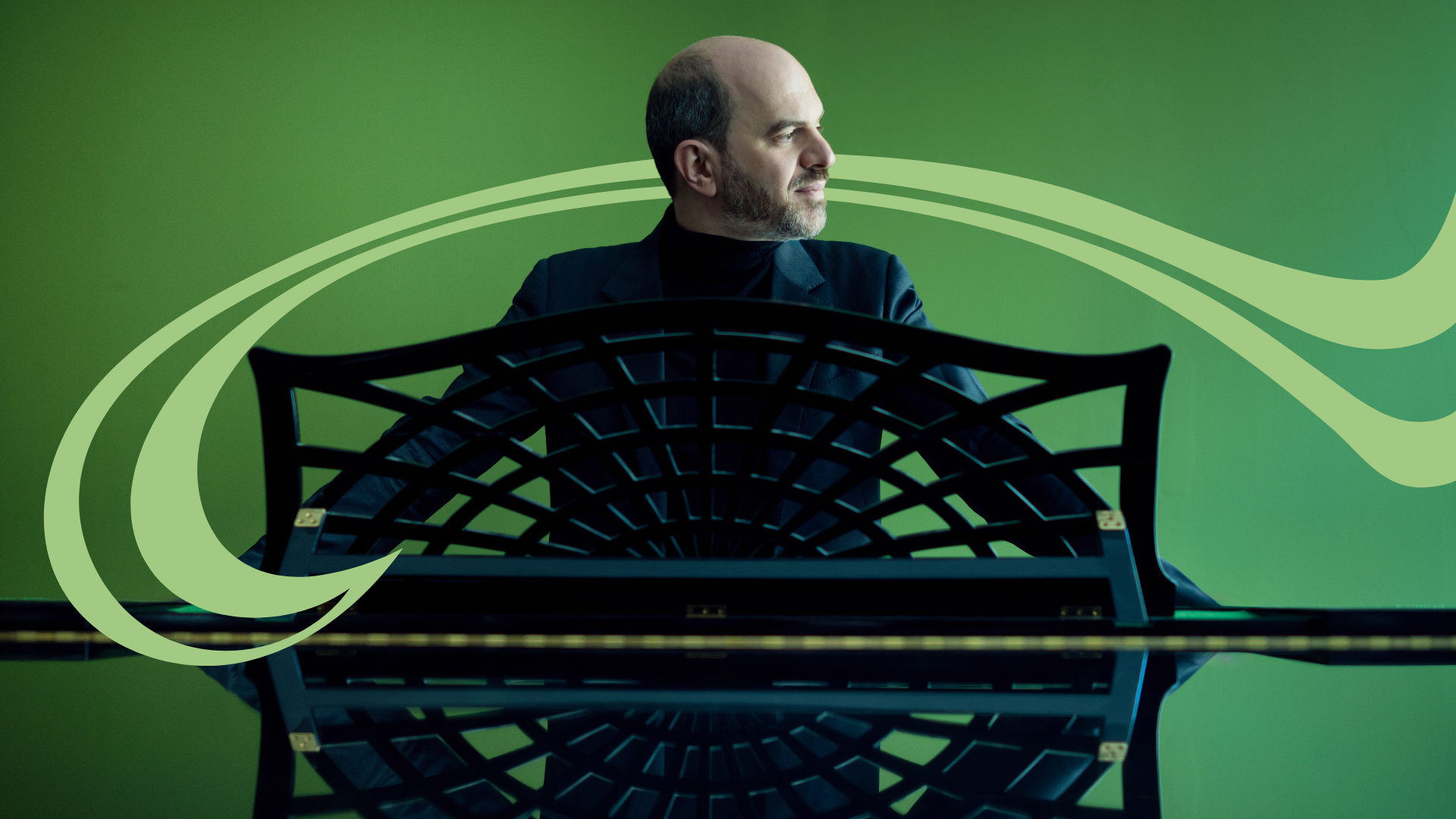
Brad Mehldau & Kirill Gerstein | May 4 | Learn More | Get Tickets
Kirill Gerstein & KSO with Beethoven’s Piano Concertos | May 6 | Learn More | Get Tickets
Some artists build careers around a particular repertoire. Others become known for a specific interpretive voice. 2010 Gilmore Artist Kirill Gerstein has taken a less predictable path, one defined by range: jazz and classical, established masterworks and new commissions, solo performance and collaboration, intellectual rigor and spontaneity.
At the 2026 Gilmore International Piano Festival, that range comes into focus across two very different evenings. On May 4, Gerstein joins Brad Mehldau for a duo piano concert shaped by dialogue across musical traditions. Two nights later, he returns to the stage with the Kalamazoo Symphony Orchestra for a program of Beethoven’s Piano Concertos Nos. 1, 3, and 4, leading the orchestra from the keyboard while performing all three works in a single evening.
The contrast between those concerts is striking, but it also feels characteristic. Gerstein has long been drawn to programs that resist easy definition, where style and structure are less fixed than they first appear.
A Classical Career Built on Jazz
Before his career took shape on international classical stages, Gerstein arrived at Berklee College of Music at age 14, studying jazz in an environment built around improvisation, harmonic flexibility, and constant listening.
That background has remained audible in his playing. Even in highly structured classical repertoire, there is often a sense of openness in phrasing and timing, as though interpretation is being actively formed in the moment rather than delivered from a settled blueprint.
It is part of what makes his pairing with Mehldau so compelling. Both pianists are deeply identified with their own musical traditions, yet both move easily beyond them. Mehldau’s work has long drawn on classical form; Gerstein’s classical playing has never entirely left behind the instincts of jazz.
Two pianos naturally create conversation, but this program offers something more layered: two musicians whose musical languages overlap in unexpected places, moving between precision and risk, written form and improvisatory instinct.
The result is unlikely to feel like a conventional recital. More likely, it will unfold as a sustained exchange, with each player shaping and reshaping the space in real time.
Brad Mehldau & Kirill Gerstein | May 4 | Learn More | Get Tickets
Beethoven at Full Scale
If May 4 reveals Gerstein’s boundless stylistic range, May 6 will reveal his astonishing stamina and command.
Gerstein will perform Beethoven’s First, Third, and Fourth Piano Concertos in a single concert, while directing the Kalamazoo Symphony Orchestra from the keyboard.
The format has historical precedent. In Beethoven’s own time, piano concertos were often led by the soloist rather than a separate conductor. But in contemporary performance, the approach remains unusual, not least because of what it demands from the pianist: technical control, large-scale architectural thinking, and continuous communication with the orchestra.
Each concerto occupies its own distinct territory. The First remains rooted in classical balance, full of sharp wit and youthful energy. The Third introduces greater weight and dramatic tension. The Fourth begins with one of Beethoven’s most striking openings, the piano speaking alone before the orchestra enters.
To perform all three in one evening requires unusual stamina. To shape the larger arc while guiding the orchestra adds another layer of complexity.
For the audience, the effect is cumulative: three different portraits of Beethoven heard not separately, but as part of a single unfolding argument.
Kirill Gerstein & KSO with Beethoven’s Piano Concertos | May 6 | Learn More | Get Tickets
A Long Relationship with The Gilmore
Gerstein’s history with The Gilmore is unusually deep, even by the standards of an organization known for following artists across decades.
He remains the only pianist to have received both the Gilmore Young Artist Award and the Gilmore Artist Award, a distinction that traces an exceptional artistic trajectory from early recognition to international stature. Along the way, he has appeared on the Rising Stars Series, the Piano Masters Series, and returned repeatedly to the Festival as his career has continued to expand.
That relationship has not been defined only by performances. Since receiving the Gilmore Artist Award, Gerstein has also worked closely with The Gilmore to bring new music into the repertoire, collaborating on six commissions written for him by composers including Matthew Aucoin, Alexander Goehr, Timo Andres, Brad Mehldau, Chick Corea, and Oliver Knussen.
Taken together, those commissions suggest something larger than a presenter-artist relationship. They reflect an ongoing exchange: an artist returning not only to perform, but to test ideas, expand the repertoire, and leave behind work that did not exist before.
Two Concerts, Two Perspectives
What these two Festival appearances reveal most clearly is the breadth of Gerstein’s artistic thinking.
One evening is built around shared language and musical responsiveness. The other depends on long-form structure, endurance, and leadership from within the score.
Yet both draw on the same qualities that have defined his career: curiosity, technical authority, and an unwillingness to treat music as fixed.
For Gilmore audiences, the opportunity is not simply to hear two concerts by the same pianist, but to encounter two very different ways an artist can inhabit the stage — first in conversation, then in command, each shaped by a musician whose career has never settled into a single lane.