
Gilmore Festival Fellows Reviews: Thirteen ways of looking at a blackbird
May 15, 2026

Laurence Vittes
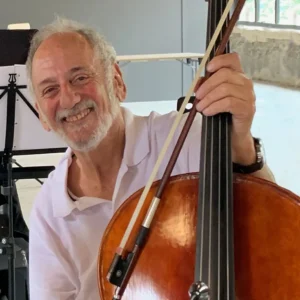
When The Gilmore invited me to lead writing workshops for the Fellows this May, among the ideas I brought with me, one felt especially right for this particular festival: Wallace Stevens’s poem “Thirteen Ways of Looking at a Blackbird”–the idea that the same subject, seen through different eyes, or heard through different ears, yields not one truth but many. The Gilmore’s non-competitive spirit made it a natural fit. Each Fellow would have an equal voice.
The first workshop drew a remarkable guest in Sean Hickey, head of the Pentatone record label and one of the most thoughtful advocates for classical music’s place in the world–a reminder that articulating what we hear matters well beyond the concert hall. On the evening of May 2nd, nine Fellows went to Alexandre Kantorow’s recital at Chenery Auditorium while three went to the Cyrus Chestnut Trio at Bell’s Eccentric Café–same night, different worlds. We reconvened the next afternoon and read the reviews aloud. As each Fellow read, they came alive.
Executive and Artistic Director Pierre van der Westhuizen put his finger on why. “You listen differently,” he said, “when you have to react in words. It turns something on inside.”
The exchange between the jazz and classical Fellows–each group hearing what the other brought–was exactly what The Gilmore’s deepening commitment to both traditions promises. As the reviews published here show, it delivered.
Seven ways of hearing Kantorow. Two of hearing Chestnut. In the words of Maya Angelou: more alike than unalike–and every one of them honestly heard.
Gilmore Festival Fellows Reviews–Cyrus Chesnut
Byline: Aris Chalin

Oberons and Two-hearted ales in hand, the Gilmore Piano Festival goers came to Bell’s Eccentric Café in search of jazz–Cyrus Chesnut delivered jazz, and so much more. The audience was indeed awed at Chestnut’s command of swing, blues, and technique. Michigan’s healthy local talent was on display with musicians Sean Dobbins and Laura-Simone Martin holding down the rhythmic fort on drums and bass respectively.
Chestnut is a beloved figure in the jazz piano world, and for good reason. It was apparent from the first few notes of his original tune Cured and Seasoned that his connection to the blues and swing are paramount to his sound. From loud, bombastic heights of solos, to intimate ballads, his range of emotions were on full display. His bandmates leaned into this heavily, with Laura-Simone taking an emphatic opening solo on his composition, Big Foot. To Chestnut, the blues and jazz are paths towards joy, with his goal to leave the audience in a better emotional place than they entered. Even with limited rehearsal time and the band finding each other’s sound in real time, they all succeeded tremendously.
The Gilmore is a unique setting for a jazz pianist, in that their leaning into classical and third-stream are equally as recognized and appreciated as leaning into the jazz canon. In addition to playful Mozart Sonata quotes, Chestnut presented Oscar Peterson’s Salute to Bach, a death defying tight-rope act connecting the world of blues and baroque. Not leaving it there, he also played an intimate waltz rendition of Erik Satie’s Gymnopedie No. 1.
Cyrus Chestnut is a figure not to be missed. His expertise runs deep, with influences in J.S. Bach and Mozart just as strong as bebop giants Bud Powell and Oscar Peterson. He has a voice steeped in the tradition with a freshness that keeps audiences on their toes, all while the swing remains king.
Byline: Tomás Jonsson

Not everything goes according to plan at a jazz concert–and at Bell’s Eccentric Café, that turned out to be exactly the point. The Cyrus Chestnut Trio enraptured the crowd at Bell’s with a tasteful blend of originals and reharmonized standards.
One of the highlights of the night was the way he would intersperse references to hymns (such as A Mighty Fortress is Our God) or famous classical melodies (such as Mozart’s Piano Sonata K. 545). His treatment of A Mighty Fortress was particularly memorable because it was completely reharmonized with lush postbop harmonies.
Chestnut had a natural rapport with the audience, who particularly seemed to enjoy his soulful, original tune Big Foot. The song opened with an expressive introduction by rising star Laura Simone-Martin on the double bass. Chestnut was generous with shining the spotlight on his collaborators, going so far as to step out of the way for the crowd to better see and hear her play her solo introduction.
Chestnut’s ballad playing is sensitive and ethereal, at times recalling the feather-light touch of Art Tatum. His blues playing is rollicking and deeply rooted in the tradition, evoking the ghost of players like Oscar Peterson. The band evidently was having a great time onstage, even during particularly difficult ensemble passages. As in any jazz performance, not everything will go according to plan. In one moment, the drummer Sean Dobbins, a hard-swinging and thoughtful sideman, started a big build setting up a switch from brushes to sticks. Chestnut, however, was not quite ready to amp up the energy at that point in the solo. He quickly held up a hand sign, which Dobbins caught immediately, signaling to delay the transition to sticks till later in the solo. When the solo built towards its climax, the transition was right where it needed to be.
Chestnut is never in a hurry to get to the big moments. Sometimes he is content to let a song simmer, swinging with a quiet intensity all the way through. On Killer Joe, it was refreshing to have the melody speak for itself, unencumbered by the need some younger pianists have to show off. The program was warmly received and was full of little surprises. The Cyrus Chestnut Trio is never predictable–which, at Bell’s Eccentric Café, was exactly what the night called for.
Gilmore Festival Fellows Reviews–2024 Gilmore Artist Alexandre Kantorow
Byline: Calvin Abdiel
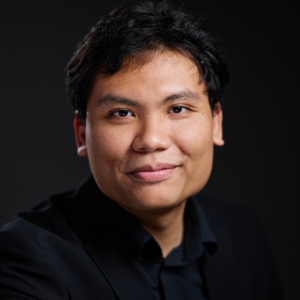
2024 Gilmore Artist Alexandre Kantorow opened with Liszt–not Bach–and the evening never looked back.
There was a notable change in the set-up of the Chenery Auditorium, as the piano was positioned further back in the hall compared to the previous night. Kantorow launched straight into Liszt’s Variations on Weinen, Klagen, Sorgen, Zagen S. 180, offering a structurally concise reading of the work. The chromatic recitatives were communicated with a certain austerity reminiscent of Liszt’s late works, while he breezed through the thorniest passages with a great sense of nobility.
Kantorow explored the melancholic side of Medtner’s Piano Sonata in F Minor, Op. 5″, a quintessentially Russian element in comparison to the late Geoffrey Tozer’s fiery take in his recording. The unwieldy counterpoint inherent in Medtner was clearly delineated by Kantorow, who showcased the work’s cerebral genius. His articulate approach fitted well to reveal the work’s complex construction. Kantorow also explored the austere element in the lyrical second movement, focusing on its motivic discourse. Kantorow also exploits the classical, Beethovenian quality of the last movement in Medtner’s music, as he untangled the dense counterpoint in the fughetta.
The second half began with a noble exploration of Chopin’s Prelude in C-sharp Minor, Op. 45, with a slight hint of gossamer texture in the cadenza. Hillborg’s The Kalamazoo Flow, commissioned by the pianist with assistance from The Gilmore, proved an attractive addition to the festival, and Kantorow communicated its jazzy, quirky elements to rousing applause.
It was refreshing to then hear a healthy conception of Beethoven’s Piano Sonata No. 32 in C Minor, Op. 111, without the philosophical overtones that too often accompany performances of this work. The listener was immediately grasped by the visceral immediacy of the first movement, punctuated by moments of introspection. Kantorow made a compelling case that the variations of the second movement still represent Beethoven at the height of his powers, even foreshadowing the harmonic subtlety of Brahms. In the music-box closing of Op. 111, Kantorow achieved something rare: a hypnotic, crystalline clarity that seemed to still the entire hall.
The concert ended with a lovely encore: a duet with the Executive and Artistic Director of The Gilmore, Pierre van der Westhuizen, with a movement from Dolly Suite by Faure.
Byline: Nathan Cheung

Not Bach, Liszt–and from that first fearless choice, Alexandre Kantorow had the full attention of everyone in the hall. His ability to make the unfamiliar wholly comprehensible, emotionally meaningful, and even awe-inspiring is uncanny. Lesser played works such as Bach/Liszt’s Variations on Weinen, Klagen, Sorgen, Zagen S. 180 and Medtner’s First Sonata benefited immensely from this, as did the premiere of The Kalamazoo Flow by Anders Hillborg. With any of the works performed that night, there existed a clear narrative for the attentive listener and layman alike.
Liszt opened this momentous concert. Not Bach, Liszt. A fearless attitude, one that would pervade the night and assure me of my complete engagement. Not Bach, Liszt. I’m all ears. Feed my hungry soul with innovation, with a new take, perhaps with something earth-shattering. Well-fed, I was. Carefully articulated releases, subtle delays in timing while maintaining good flow, and the gradual emotional pacing were all in good taste. All this without losing the traditional Lisztian Journey, replete with pyrotechnic hoops. A work that comes to mind is the third movement of Respighi’s Violin Sonata which is also a passacaglia of sorts, featuring Lisztian technique.
Rarely, if ever, have I heard Medtner like this—a Dostoyevskian tale in which every word was gold. Kantorow demonstrated his prowess of vocal delivery particularly with the opening theme, then throughout the work. It was rhetoric. Perhaps the only thing I could have wanted more of is a sense of outcry in this music. The second movement was a challenge for me to understand on an emotional level, but Kantorow’s control of counterpoint, legato, voicing, and phrasing was impeccable. Then there was the return of Lisztian drama in the operatic third movement, sending me into a stupor in the midst of something profound. Not a repeated note was missed in the finale. Stunning. It is a herculean effort to tackle any Medtner Sonata, let alone to interpret and channel it for an audience.
Chopin’s Op. 45 Prelude fittingly lulled us into the second half. Here I came to realize that there is always a glide to his playing, always a glide. No oversentimentality in Kantorow’s Chopin. Well, except for the juicy lean and length of the leading tone.
Hillborg’s work fits Kantorow’s tendencies. That glide, that flow, it’s always there. Brilliance. Clarity. Lightness. No intricacy was lost. One must consider that the toccatas were extremely formidable, bringing to mind Ligeti’s Devil’s Staircase. Few artists would treat the commissioned work with equal artistry to the classics as Kantorow does.
One does not simply play Beethoven’s 111 without understanding its significance as Beethoven’s last, as an eternal cornerstone in the repertoire, and as a ubiquitous audition choice for piano students around the world. Yet, Kantorow launches again with that fearlessness. He did, though, hunch the most I had ever seen him hunch—a sign of absolute desire to do justice, perhaps? And justice he gave. This time I heard not just a pianist, but a whole orchestra. No funny business. Just a statesman. Stateliness on another level. The second movement was no less masterfully handled. Subtle timings and expression, changes in repeats. Again there was that flow, that inevitability. At times, I hoped for an even deeper transcendence, even more magic, but that flow may have prevented me from achieving such a state. This, of course, does not deter my conversion to being a Kantorow follower.
And finally, a lovely morsel with Gilmore’s own Pierre van der Westhuizen. I am further convinced that Fauré’s Berceuse from Dolly Suite is for all ages. Like the intermission cookie from Sarkozy Bakery, the Fauré morsel — and the entire evening — was fully delectable.
Byline: Takeshi Nagayasu
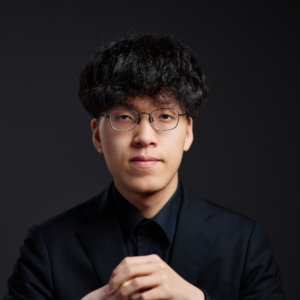 Watch Alexandre Kantorow’s left hand–even when the melody is in the right, it never stops moving, which is particularly noticeable in the opening of the commissioned work, The Kalamazoo Flow. Composed by Anders Hillborg, it’s inspired by water, paired beautifully with a short prelude by Chopin, which shares a similarly fluid texture. Kantorow’s physical approach at the keyboard reinforced the flowing texture.
Musically, The Kalamazoo Flow itself is quite simple in its harmonic and textural language. The piece feels fragmented, with no strong sense of a clear direction. The sectional writing might be an intentional choice by the composer. Nevertheless, Kantorow managed to shape each section convincingly, making the structure as comprehensible as possible. When the opening material returns in G Dorian, instead of the initial D Dorian, Kantorow brings a subtle but meaningful sense of progression by making the sound even more special in the return. A more rhythmic section felt somewhat mechanical, which seems unrelated to the water-inspired character present in other parts of the music, though it’s unclear whether this is a compositional or an interpretive choice. More detailed program notes might have helped to clarify the intended purpose of this part of the music.
One of the most memorable details was Kantorow’s delicate pedal work. He lifted the pedal with such precision that the sound shimmered, almost like seeing reflections on water–and suddenly, the title The Kalamazoo Flow made perfect sense.
Byline: Spencer McKee
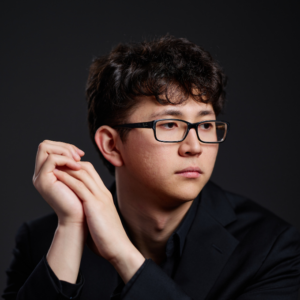
On Saturday evening, supported by the acoustics of Chenery Auditorium, pianist Alexandre Kantorow lived within the intersection of crystalline clarity and exhilarating energy. Fresh off a thrilling performance of Tchaikovsky’s Second Piano Concerto just the night before, Kantorow presented a solo recital featuring Liszt’s Variations on J.S. Bach’s Cantata Weinen, Klagen, Sorgen, Zagen, Medtner’s Piano Sonata in F Minor, Op. 5, Chopin’s Prelude in C-sharp Minor, Op. 45, the premiere of Anders Hillborg’s The Kalamazoo Flow, and Beethoven’s last Piano Sonata, Op. 111.
In Liszt’s transcription, the French pianist navigated thick textures, employed voicing that penetrated the hall’s distance and brought forth blazing diminished arpeggios, while always preserving a delineation between melody and underlying texture.
Within the Medtner sonata–easily the longest and densest work on the program–Kantorow brought forth drama and passion in the first movement, a march-like darkness in the second, a slow, burning intensity in the third, and an unstoppable flow in the fourth. In this endurance test of a piece, Kantorow proved himself as sturdy as anyone.
After an intermission, he resumed with Chopin’s prelude in C-sharp Minor, Op. 45. As always, he truly excelled at projecting and maintaining melody lines above an often-accompanimental left hand.
Next, Kantorow breathed life into the world premiere of a new work commissioned specifically for artist with assistance from The Gilmore. The Kalamazoo Flow remained in a constant state of motion, always seeming to flit about from one idea to the next or repeating a former motif. Throughout the piece, composer Anders Hillborg incorporated gobs of gnarly fingerwork that Kantorow navigated with astounding articulation and clarity.
After an energetic finish and a helping hand from the stage crew, he launched immediately into Beethoven’s monumental Sonata No. 32 in C Minor, Op. 111. He opted for an opening that was much more virtuosic and stormy than stoic, eventually announcing the arrival of the fugal material with menacing articulation. In this section, each left hand octave felt like a pillar of sound that resounded throughout the hall, never overbearing and always staying true to the “maestoso” marking. Kantorow’s warm sound, in tandem with superb voicing, shone in the second movement. He maintained a flow that brought the audience along up to the legendary trills in the high register of the keyboard. Here is where I felt the pianist truly transcended the space and his instrument. The control of both fingers and tone created an atmosphere that almost seemed to suspend time itself over the stage. Following the peaceful ending of the sonata and a few bows, Kantorow returned to the stage with The Gilmore’s Executive and Artistic Director, Pierre van der Westhuizen for an encore performance of the Berceuse from Fauré’s Dolly Suite. I left Chenery Auditorium eagerly awaiting the next opportunity to hear Alexandre Kantorow present such a diverse offering of profound works.
Byline: Shelley Xuechun Shao
 No pause, black boots. Recitative opening, light pedal on the Aria. 2024 Gilmore Artist Alexandre Kantorow’s clear trills followed by singing accompaniment, chromatic scales, crystal intensity that increases through the range of volume.
Texture changes from storm-like to the use of una corda, creating a moment of speciality in the chaos, making space to showcase Franz Liszt’s virtuosity in transcribing Johann Sebastian Bach–a real transition back into lyricism again, bending into a whole different dynamic.
Kantorow then moved cautiously shortly after sitting down, playing such an opening of Nikolai Medtner’s F Minor Sonata: the tempo on the slower side, leading to a long-built accelerando. Then detached pedal keeping the movement going, rhythm in the bass. By the third theme, we hear fairy tales. The sound world of Medtner blends well with the return of the first thematic material in a faster run. Slight pedals created a certain dry note throughout the second theme.
The Intermezzo in a moderate pace. Not too much swing like jazz, not too relaxing, as a lullaby. The ability to continue the intimacy of the motivic patterns is impressive. The Largo begins with fine touches, perhaps meant to create a moment of relaxation. Crystal sound again evokes Skazki (“fairy-tales”). The final movement breathlessly linking into the coda, with balanced harmonies in the middle that resuming the essence of the composer’s nationalism–the folk tunes of Russia.
Frédéric Chopin’s C Minor prelude is there to introduce The Kalamazoo Flow by Anders Hillborg. The music starts from the left hand, a few pentatonic lines reminiscent of the minimalist style of John Adams and his China Gates, except, the level of intensity here is much higher. Atonal all of a sudden, theme returning, prestissimo to close the chapter.
It is ambitious, and a good idea to put a gigantic German work at the end of this program. The repeat of opening chords of Op. 111 reveals Kantorow’s dedication as an artist. When Beethoven’s boogie-woogie appears in the slow movement, it is clear that the pianist enjoys it, and so do we all.
Where others would weigh Beethoven’s final sonata down with last words and legacy, Kantorow lifted the audience up. Is this not a better idea?
Byline: Daria Vasileva

2024 Gilmore Artist Alexandre Kantorow opened with Liszt’s struggle and closed with Beethoven’s acceptance–and by the end of the evening, the arc felt inevitable.
In Variations on Weinen, Klagen, Sorgen, Zagen, S. 180 by Franz Liszt, he built a clear emotional journey, reflecting the composer’s deeply personal and spiritual period. The dark, chromatic variations conveyed a strong sense of inevitability; at times, the intense octaves even sounded almost Mephistophelean. This tension gradually gave way to a peaceful chorale, “Was Gott tut, das ist wohlgetan,” played with a divine clarity and calm. This idea of struggle leading to acceptance connected closely with Piano Sonata No. 32 in C Minor, Op. 111 by Ludwig van Beethoven, heard at the end of the program.
In Sonata in F Minor, Op. 5 by Nikolai Medtner, Kantorow created the feeling of a lost, fairy-tale world. His playing was both deeply expressive and carefully controlled, never letting the rich textures become unclear, what happens so often with pianists playing Medtner. Themes seemed to grow naturally from one section to another, forming a continuous musical story.
The second half began with the introspective Prelude in C-sharp Minor, Op. 45 by Frédéric Chopin, where Kantorow brought out serene, almost lonely colors in the upper register. In The Kalamazoo Flow by Anders Hillborg, heard in its U.S. premiere, the same register sounded completely different–bright, transparent, and full of energy. The contrast was striking, yet his precise playing connected everything. Beethoven’s Op. 111 then became the natural conclusion: the first movement suggested a struggle with fate, while the second opened a path toward acceptance and something beyond. From Liszt’s dark chromatic variations to Beethoven’s luminous acceptance, Kantorow made the entire evening feel like one inevitable, unified journey.
Byline: Ningxin (Jen) Zhan
 Under Alexandre Kantorow’s hands, a Chopin prelude becomes as exquisite and layered as a fine French pastry. I am captivated by his approach to vertical sonorities. The crafting and voicing of his chords are masterful ,deserving of immense praise. There is a clarity, a structural depth, and a dimensional space within his chordal executions that goes far beyond the mere “cleanness” of impeccable technique. I also noticed that he finishes each phrase with a distinctive physical release, letting the sound resonate as his hands lift into the air.
Kantorow’s artistry of tonal control is extraordinary. He possesses an innate understanding of the large-scale form of each piece. The ears of the audience are instantly captivated and led along a deliberate, soaring trajectory. This structural cohesiveness, combined with a sophisticated command of dynamic levels, creates a breathtaking experience for the listener.
During the commissioned piece The Kalamazoo Flow by Hillborg, the notes of the pentatonic passages fluctuated like silver pins and needles on a thread, weaving a delicate crochet pattern that pulled the audience into a world of vivid color and imagination. Every note was imbued with intention and impeccable taste. His fortes were powerful yet remained graceful, never vulgar, never harsh. He plays with a refined elegance, maintaining just enough tension to build the architecture of a piece with the most intricate internal designs.
Concluding the program with Op. 111 was a sublime choice, elevating the entire recital. Watching Kantorow perform the second movement of Op. 111 was so deeply moving that I left Chenery Auditorium determined to program it myself.
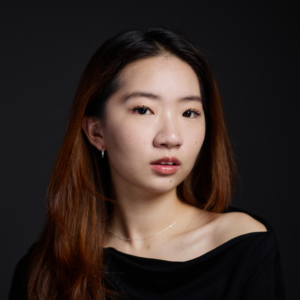
Festival Fellows headshots taken by Chris McGuire.